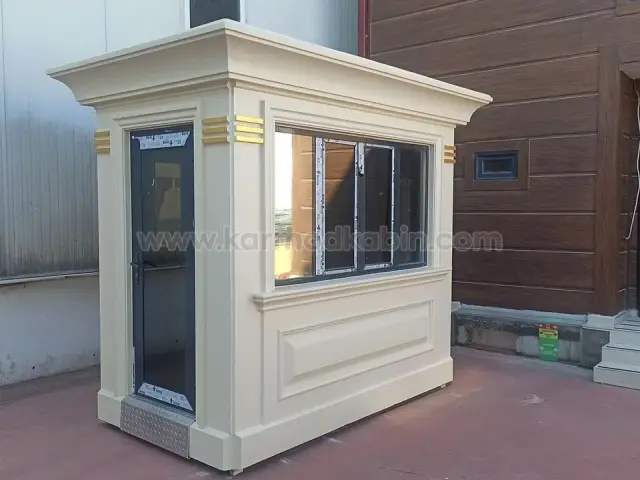
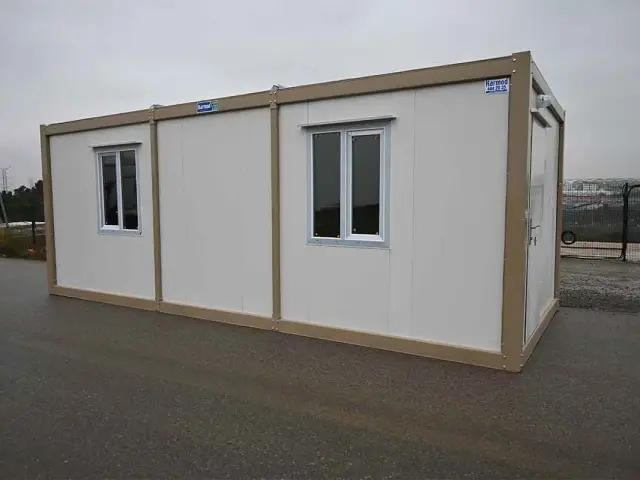
A city centre kiosk can sell coffee to commuters, tickets to coach passengers or a brand's products for a season, from a footprint smaller than a parking space. The cabin is the straightforward part. Most of the work is in permissions, the pitch and the delivery, and doing those in the right order avoids paying for a kiosk you cannot use.
What town-centre kiosks are used for
- Coffee and food. Staff serve through a window or hatch, with power for machines and space for stock. See our coffee, food and retail kiosks for sizes and prices.
- Tickets and information. One or two staff, a till or card reader, clear glazing onto the queue and heating for winter shifts. See ticket booths and information kiosks.
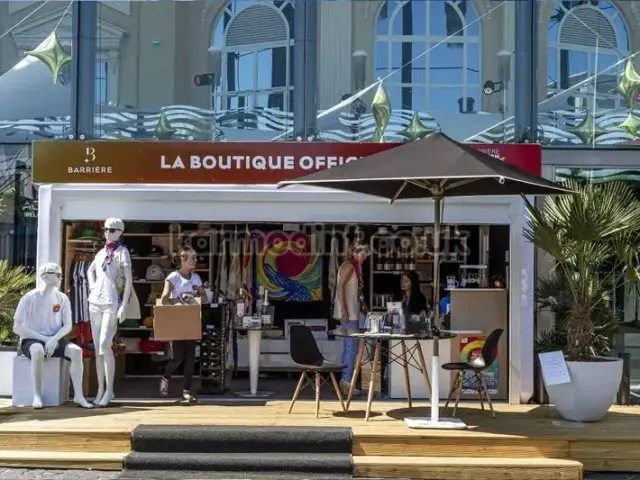
- Retail pop-ups. A brand selling over a counter can use a small kiosk. Where the shop needs to trade from inside the unit, a larger unit works better, like the pop-up boutique for Barrière's official shop on our projects page, with a fully glazed front, a branded fascia and room inside for shelving and stock.
Permissions to sort out before you order
Three separate permissions can apply: permission to trade, permission to use the land, and planning. Having one does not give you the others. This is a general summary, not legal advice, so confirm the details with the council for the area where you want to trade.
Street trading: a licence or consent from the council
England (outside London) and Wales. Councils can adopt street trading controls under the Local Government (Miscellaneous Provisions) Act 1982 and then designate streets as licence streets (you need a street trading licence), consent streets (you need the council's consent) or prohibited streets. A "street" here includes any area the public can get onto without paying, so a privately owned square or forecourt can count.
A licence application must describe any stall or container you will trade from, so have the kiosk's size and drawing ready. A consent does not cover trading from a stall or vehicle unless the council includes that permission, so tell the council from the start that you plan to trade from a kiosk. The council can refuse a licence if there is not enough space to trade without undue interference or inconvenience to people using the street, so pavement width matters.
London. London has its own street trading legislation, and licences come from the borough council, or in the City of London from the City of London Corporation. In Westminster, the City of Westminster Act 1999 makes it unlawful to trade in the street without a street trading licence or temporary licence from the council. Its definition of a street includes open areas within 7 metres of a road or footway that the public can walk onto without paying, which can take in privately owned land beside the pavement.
Scotland. Street trading needs a street trader's licence from the local council under the Civic Government (Scotland) Act 1982, with a few exemptions.
Northern Ireland. District councils license street trading under the Street Trading Act (Northern Ireland) 2001, and a stationary trader trades only from the pitch the council allocates.
The landowner's agreement on private sites
Stations, shopping centres, retail parks and campuses are usually privately owned or managed, so you need the owner's or operator's agreement for the pitch, normally a licence or lease covering rent, trading hours and power. Ask about their rules on signage and delivery times before you choose a design.
Get the agreement in writing, because some councils ask to see the owner's consent with a street trading application. It does not replace the council's permission: land the public can walk onto without paying may still count as a street.
Planning permission and signs
In England, permitted development allows most temporary uses of land for up to 28 days in a calendar year, including a moveable structure for that use, but not within the curtilage of a building. A kiosk that stays longer is more likely to need planning permission, and an illuminated sign of any size may need advertisement consent. Rules differ in Wales, Scotland and Northern Ireland, so ask the local planning authority before you order. We can supply drawings for a planning application.
Selling food
A food business must register with its local authority at least 28 days before it starts trading. In England, Wales and Northern Ireland this includes stalls and other temporary premises; in Scotland you register with the council's environmental health service. Talk to environmental health early about hand washing, water and waste, because their answers affect the size and layout you need.
Choosing a kiosk shell: GRP, MetroCity or KompoCity
Three Karmod shells suit town-centre kiosks, and all three arrive as finished units. Prices exclude VAT, delivery and offloading.
| Shell | Price from | Weight | Branding | Services |
|---|
| GRP Cabin | £3,890 + VAT (1.50 m × 1.50 m) | 280 kg to 650 kg | Moulded shell finished in a brand colour, graphics applied before delivery; can be refinished later | Electrical pack from £475 + VAT, wall heater from £225 + VAT, customised electrics priced on application |
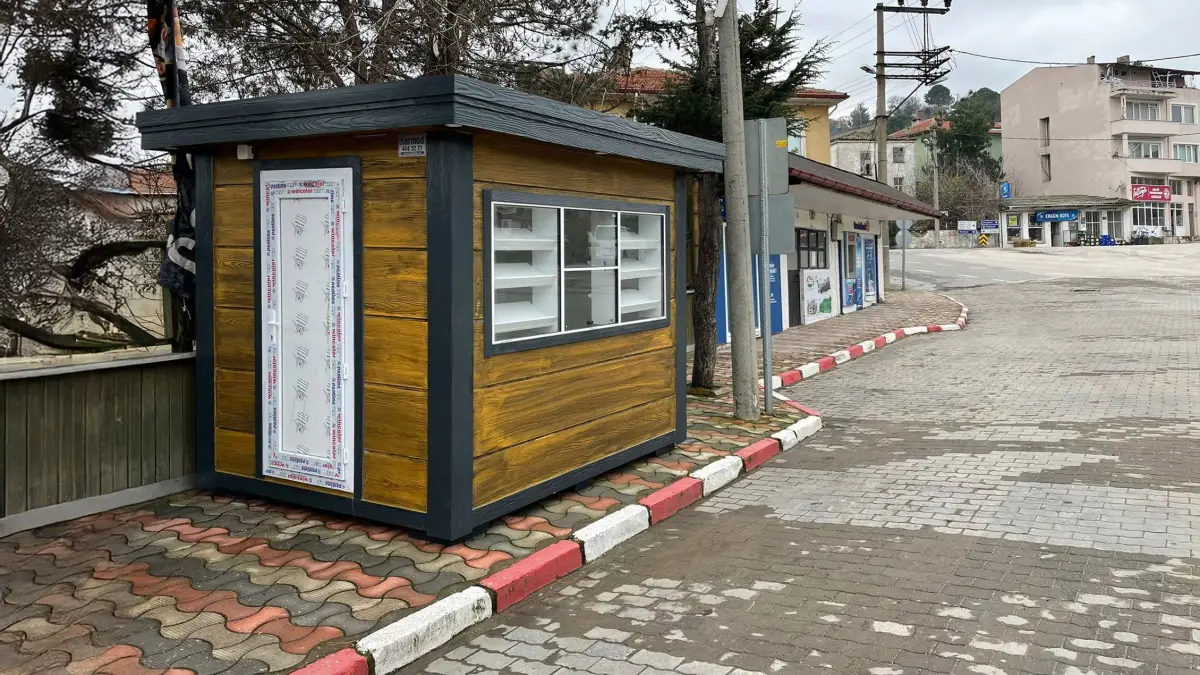
| MetroCity Modular Cabin | £5,595 + VAT (1.40 m × 1.40 m) | 700 kg to 1,400 kg | Betopan cladding with colour and finish options, such as olive green or timber-effect panels | Electrics, lighting and sockets fitted at the factory |
| KompoCity Composite Cabin | £6,890 + VAT (1.40 m × 1.40 m) | 850 kg to 1,900 kg | Aluminium composite panels in colours matched to your identity, with logos applied to the panels | Electrics, lighting, sockets and ventilation; room for a small sink in the larger sizes |
GRP is the lightest of the three, so it is the simplest to lift and to move if the pitch changes. The clad shells are heavier, so plan the lift and the base with that in mind.
Choose the size from the pitch, not the catalogue. Measure the space you are allowed, then leave room for a queue and for people walking past. One person selling tickets needs far less room than two people with a coffee machine, a fridge and stock.
Branding the kiosk to match your business
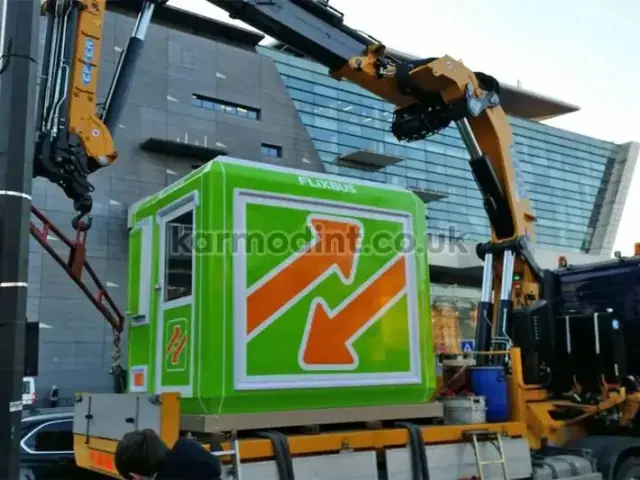
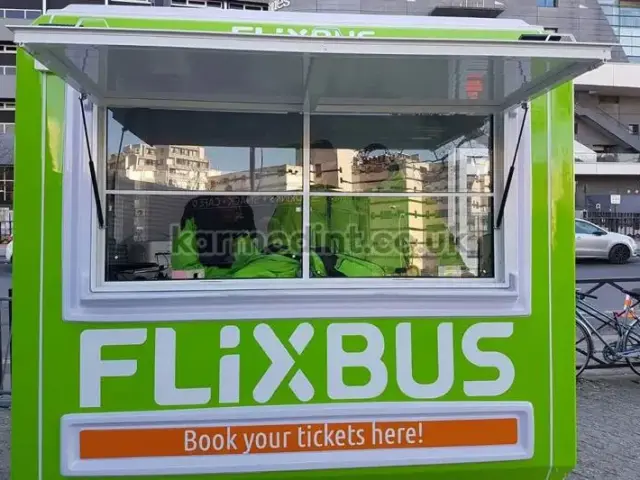
- FlixBus ticket kiosk: finished in the company green with the graphics applied before delivery, and a top-hinged serving hatch on gas struts that shelters the counter window.
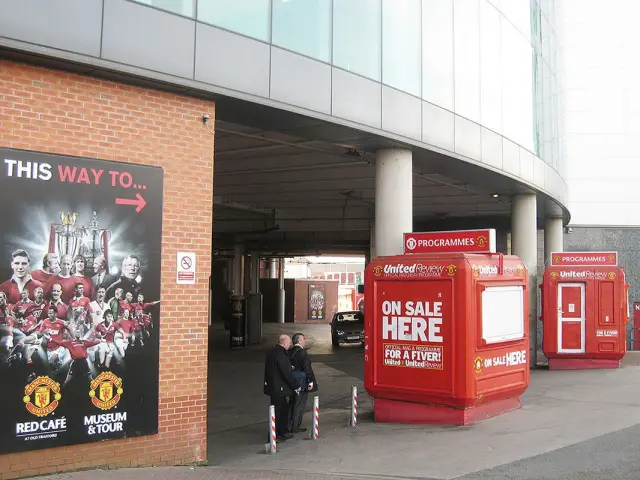
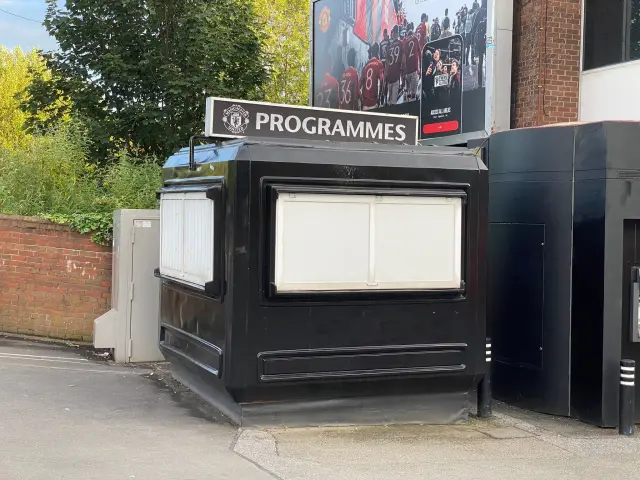
- Manchester United programme kiosks: first in the red United Review livery, then refinished in black when the club's branding changed, so the same shells stayed in service.
Send your colours and artwork with your quote request, and tell us where the serving window or hatch should go. We show the layout on a drawing before production.
Power, heating and water
Find out early where power will come from: a landlord's supply, a feed from a nearby building or a new connection. A qualified electrician should make the final connection on site.
A coffee machine, fridge or hot-food equipment usually needs more power than lights and a heater, so send us your equipment list with your quote request. Air conditioning (£2,950 + VAT) is available on the two largest GRP sizes.
Water is usually harder to arrange on a street pitch. If you need running water, tell us when you request a quote so we can confirm what is possible.
Delivery: a finished kiosk lifted into place
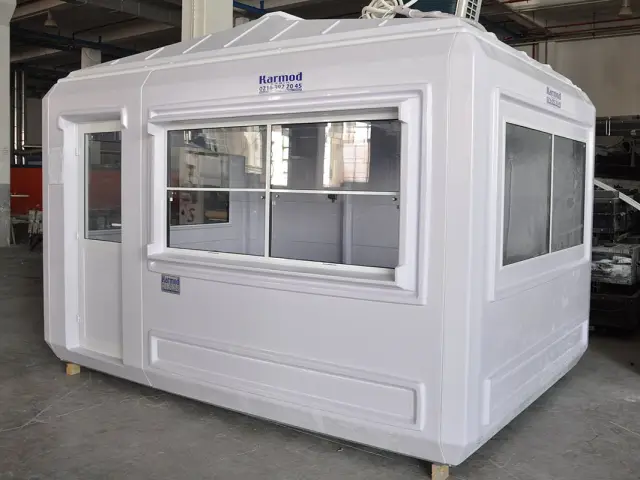
A GRP kiosk leaves the production floor as a moulded one-piece shell with the windows, door and fittings in place, so nothing is built on the street. The pitch needs a firm, level base, such as concrete pads, a slab or compacted hardstanding, and we advise on it when we prepare your quote.
Before the formal quote we check the drawing, the delivery route and the offload equipment, such as a HIAB, crane or forklift. If the lorry will stand on the road or pavement, ask the highway authority early whether a permit is needed (in Northern Ireland, DfI Roads). Our guide to preparing your site for cabin delivery has more detail.
Checklist before you order a city centre kiosk
- Agree the pitch with the landowner or operator, in writing.
- Ask the council whether you need a street trading licence or consent, and describe your kiosk when you apply.
- Ask the local planning authority whether the kiosk or its signs need permission.
- If you sell food, register the business and talk to environmental health.
- Agree power, and water if needed, with the landowner and an electrician.
- Measure the pitch, check the delivery route, then choose the shell, size and finish and check our drawing before production.
Talk to us about your pitch
Send us the pitch size, what you plan to sell and a few photos of the location. Our team in Leicestershire will suggest a shell and size and confirm the delivered price to your postcode. Contact us or call 0116 403 0143.