Karmod International

Guide

Keeping a Portable Cabin Warm and Dry: Condensation, Heat and Rain

Streaming windows, damp corners and stuffy summer afternoons: why they happen in cabins and kiosks, what to do about each, and a seasonal checklist.
Updated · 7 min read · Karmod International UK

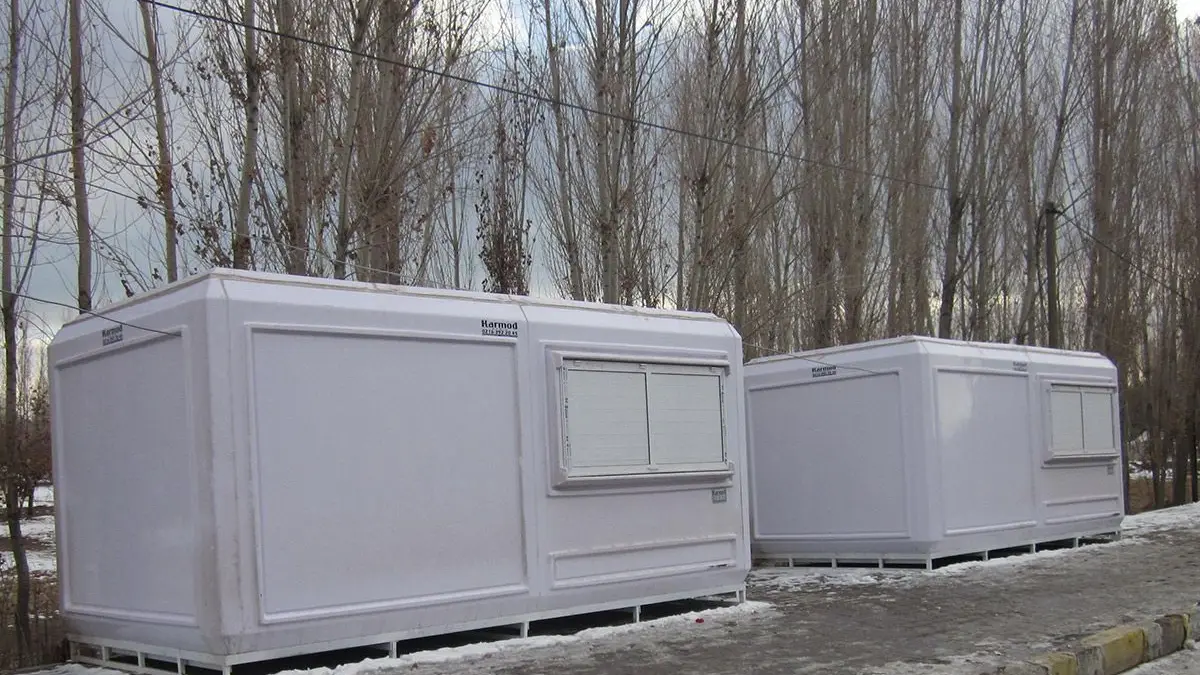
Pair of GRP cabins standing beside a road in deep winter snow and freezing conditions

Keeping a cabin warm and dry comes down to the insulation built into the unit, how the air inside is managed day to day, and keeping rain and ground water outside. This guide covers condensation, summer heat, leaks and winter shutdown for site offices, garden rooms, security huts and kiosks. For heater, air conditioning and power choices, see our guide to heating, cooling and power for cabins.

What insulates a Karmod unit

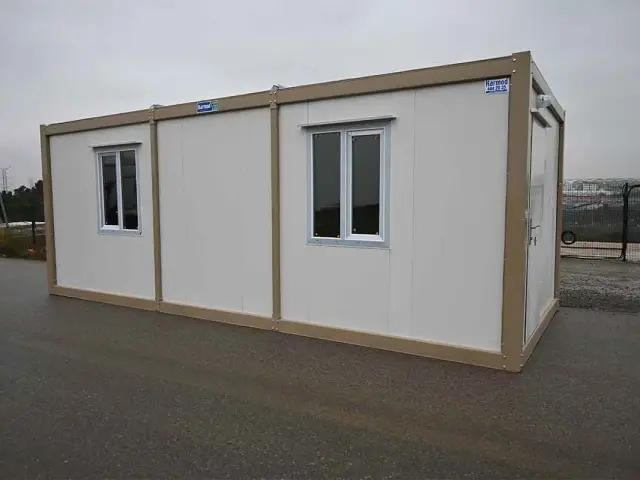
  • Portable cabins and container offices: the open-plan portable cabin is built from insulated sandwich panel on a steel frame, and every container layout comes with double-glazed PVC windows as standard.
  • Insulated panel cabins: sandwich panel walls on a steel frame, insulated against both heat and noise.
  • GRP cabins: a one-piece moulded glass reinforced polyester shell that insulates as well as keeping out the weather, and needs no extra cladding to stand through snow and frost.
  • MetroCity and KompoCity cabins: Betopan (MetroCity) or aluminium composite (KompoCity) cladding over sandwich panel that insulates against heat and sound.
  • Bulletproof cabins: interiors are lined for heat and sound insulation.

Insulation slows heat loss, so the inside of the walls stays closer to room temperature. It does not take moisture out of the air. Glass, door frames, metal fixings and corners stay the coldest surfaces, and that is where condensation shows first.

Why condensation forms in a cabin or kiosk

Warm air carries water vapour. When it meets a surface that is cold enough, below what is called the dew point, the air next to it cools and leaves water behind as droplets. A cabin holds a small volume of air, so a little moisture raises the humidity quickly. The usual sources are people breathing through a long shift, kettles and cooking, wet coats and boots hung up to dry, showers, and portable gas heaters, which give off water vapour as the gas burns.

Signs include streaming windows in the morning, black spots in corners and behind furniture, and a musty smell.

Condensation or a leak?

Condensation forms on cold surfaces, is worst on cold mornings and in a busy room, and appears whether or not it has rained. A leak usually shows after rain, at one spot: around a window or door, at a roof joint or where a cable comes in. If water returns to the same place after every downpour, check the seals described below.

How to stop condensation in a portable cabin

  • Keep a steady background heat. A cabin left to go cold overnight, then heated hard with a room full of people, mists up fast. Low, steady heat keeps walls and glass warmer. An electric wall heater can be added to every Karmod cabin and container layout, from £225 + VAT on the smaller insulated panel, GRP, MetroCity and KompoCity sizes and £375 + VAT on container layouts and bulletproof cabins.
  • Leave vents open. Keep any trickle vents and wall vents open all year, and never block them.
  • Ventilate at the source. Open a window or run an extractor while cooking, boiling the kettle or showering, and keep that room's door shut. In the office with kitchenette lobby, an internal door keeps kettles and washing-up away from the desks.
  • Dry wet gear somewhere else. Wet clothing on a heater in the office is a major source of damp. The site welfare unit with WC and kitchenette has a room at each end, and one can be used as a drying room.
  • Use electric heat, not portable gas. Portable gas heaters add moisture, and burning fuel in a small closed room brings fire and carbon monoxide risks.
  • Wipe down in the morning. Clear water off windows and frames before it soaks into seals.
  • Use a dehumidifier for longer stays. In living units and garden rooms used daily, a dehumidifier helps alongside ventilation, not instead of it.
  • Let air reach the walls. Leave a gap behind cupboards and sofas on outside walls.

Staying comfortable in summer heat

  • Shade the glass. Where you can, face the main windows away from the afternoon sun, and fit blinds that still give a guard or attendant a clear view. A deep roof overhang or a canopy over the door shades both the glass and the person inside.
  • Think about colour. A pale exterior absorbs less heat than a dark one. Karmod's MetroCity, KompoCity and GRP cabins can be finished in different colours, so weigh comfort against branding.
  • Move air through. Open windows on opposite sides, or a window and the door.
  • Add air conditioning where it is offered. It is available on every container layout and on the larger sizes of each cabin range; our heating, cooling and power guide lists the sizes and prices. It also takes some moisture out of the air as it cools.

Keeping rain and ground water out

  • Keep the base level. If a unit settles out of level, doors start to bind and seals stop closing evenly, which lets in draughts and rain. Recheck it after a hard winter or after digging nearby, and ask a groundworker to look at any pad or footing that has sunk. Our guide to preparing your site for cabin delivery covers the base types.
  • Send water away. The ground around the unit should fall away from it so rain does not pool underneath. After heavy rain, look for standing water around the unit and clear any blocked gullies or channels nearby. Keep soil, gravel and leaves from building up against the walls and the threshold.
  • Check seals. Each autumn, and after a unit has been moved, check the seals and sealant around doors, windows and cable entries. Replace any that are torn, flattened or no longer meet the frame.
  • Keep the roof clear. Leaves and moss hold water on the roof. Clear them from the ground with a long-handled tool, or use someone equipped for working at height; do not climb onto the roof yourself. After snow, clear the door, vents and steps.

Closing a cabin down for winter

If a unit will stand empty for weeks, such as a garden room in winter or a site office between phases:

  • take out food, towels, clothing and paperwork that could go mouldy;
  • leave internal doors and cupboards open, keep vents open, and lock windows and doors;
  • if the power stays on and your heater has a low or frost setting, use it;
  • if a unit with a WC, shower or kitchenette will be unheated, turn off the water and ask your plumber to drain the pipes, cistern and any water heater;
  • visit after storms to check for leaks and damp, and warm it up gradually before using it again.

Seasonal checklist

SeasonWhat to check or do
AutumnClear leaves from the roof (from the ground) and around the base; check seals; test the heater; clear the vents.
WinterKeep a steady background heat; wipe windows each morning; dry wet clothing away from the office; clear snow from doors, steps and vents; drain or protect pipes in empty units.
SpringLook for damp and mould in corners and behind furniture; recheck the base is level after frost; air the unit through.
SummerShade the glazing; ventilate through the day; clean air conditioning filters as the maker advises; check seals have not dried out.

Tell us how the unit will be used

If a unit is for long shifts, living in or year-round use, tell us when you ask for a price so the right options go into your quote. Compare our site offices and garden rooms and garden offices, or contact us to talk it through. A request through our quote page does not commit you to anything.
Examples from our projects

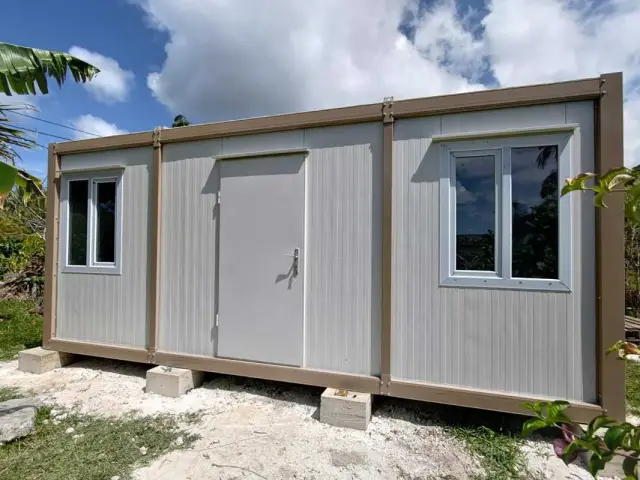
Container unit raised on concrete footings in a tropical garden, specified for humid conditions and heavy rainfall
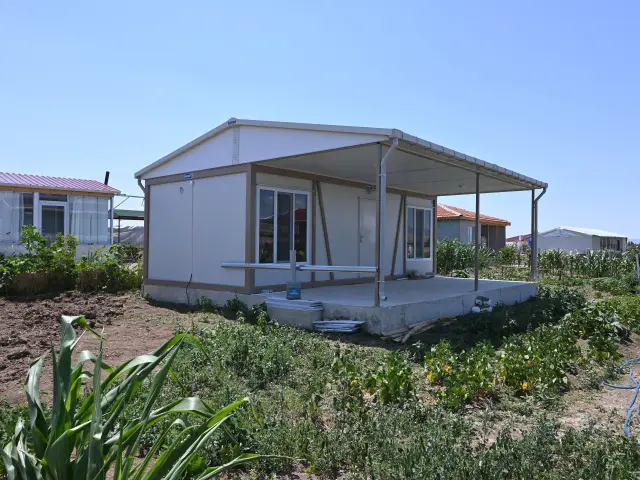
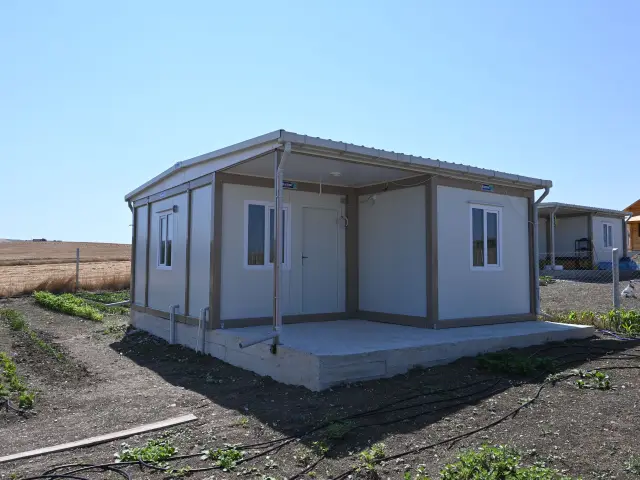
Container house raised on a concrete slab beside harvested farmland, clear of the irrigated ground
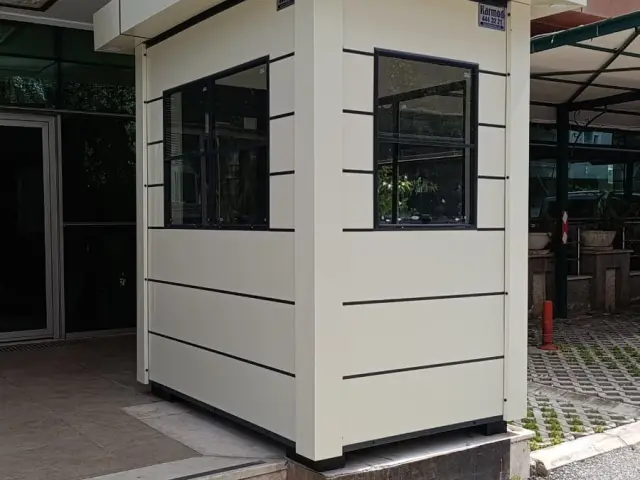
KompoCity composite gatehouse at an office door, with a deep roof overhang casting shade over the approach
Container house near Ankara with a deep canopy carried over its concrete terrace for summer shade
MetroCity gatehouse beside the barrier at a university vehicle entrance in winter weather

Questions and answers

How can I tell whether the air in my cabin is too damp?

A digital hygrometer, sold for use at home, shows the humidity in the room. If the reading stays high for most of the day and the windows stream each morning, more moisture is going in than is getting out. Note the reading at the same time each day for a week or two, then change one thing at a time, such as the heating pattern or airing after breaks, to see what makes the difference.

Is it better to air a cabin in short bursts or leave a window open?

In cold weather, short bursts usually work better. Opening a window wide for a few minutes after a break, after cooking or at the end of a shift clears moist air quickly, while the walls and furniture keep most of their warmth. A window left ajar for hours cools the room and the glass around it. Keep trickle vents and wall vents open in between for steady background ventilation.

How should I clean mould off cabin walls and window seals?

For small patches, wear rubber gloves, wipe the mould off with a damp cloth and a mould cleaner used as its label directs, then dry the surface. Do not brush it off dry, as that spreads the spores. Mould comes back unless the damp is dealt with, so if it keeps returning to the same spot, check the heating, airflow and seals in that part of the unit. For large areas, get advice before cleaning.

Is a dehumidifier worth having in a garden office?

It helps if the room is used every day through the colder months. Run it with the windows and door shut, or it ends up drying air from outside, but leave any trickle vents and wall vents open. Empty the tank often, or run its hose to a drain if it has one.

Can I screw shelves or fittings through a cabin's outside walls?

Check with us first. Every fixing through an outside wall or the roof is a possible way in for rain, and a metal fixing that passes right through can make a cold spot where condensation forms. Freestanding furniture, or fittings on internal partitions where the layout has them, avoid the problem. If you know what you want fixed where, tell us when you ask for a quote.

More guides

Talk to our UK team

Planning a site, a gatehouse or a garden office?

Tell us what the building is for and where it is going. We will suggest a unit, check delivery and send a formal quote.
Phone
0116 403 0143
Email
info@karmodint.co.uk
Opening hours
Mon - Fri, 8:00 AM - 6:00 PM GMT
Address
Unit 4 Fairfield Industrial Estate, Fair Farm Drive, Melton Road, Waltham On The Wolds, Melton Mowbray, LE14 4AJ
0116 403 0143
WhatsApp Us Instant modular support