Look for a temporary office or a gatehouse and you soon meet a set of overlapping terms: portable cabin, site cabin, container office, modular building, security hut, kiosk. Sellers use them loosely, so two quotes for "a portable cabin" can describe quite different buildings. Here is what each term usually means, how Karmod's units are built, and which type suits your job.
The terms buyers use, in plain English
What a portable cabin is
A portable cabin is a single building made in a factory, delivered on a lorry and lifted onto a prepared base. It holds one room, or a few rooms behind partitions, and it can be lifted again and used somewhere else.
What people mean by a site cabin
A site cabin is a portable cabin working on a construction site or compound. The term describes the job, not the build: site office, canteen, drying room or toilets. A cabin with toilets, washbasins and somewhere to eat is usually called a welfare unit.
Container offices: two products under one name
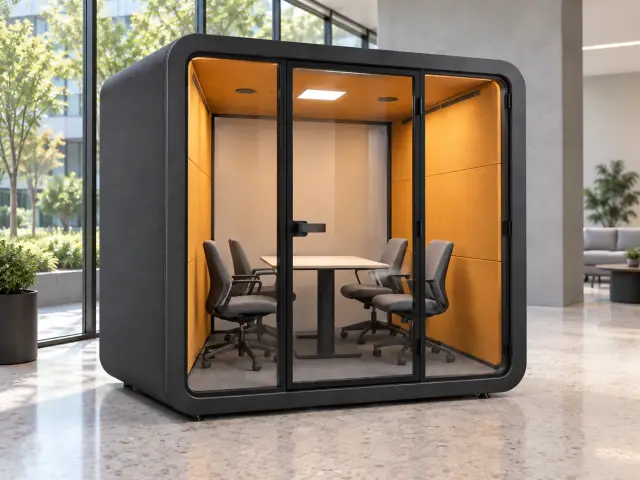
"Container" is used for two different products. Some sellers mean a converted shipping container. Others, Karmod included, mean a purpose-built cabin with a steel frame and roughly the proportions of a container, designed as a building from the start. If a quote just says "container office", ask which one you are being offered.
What makes a building modular
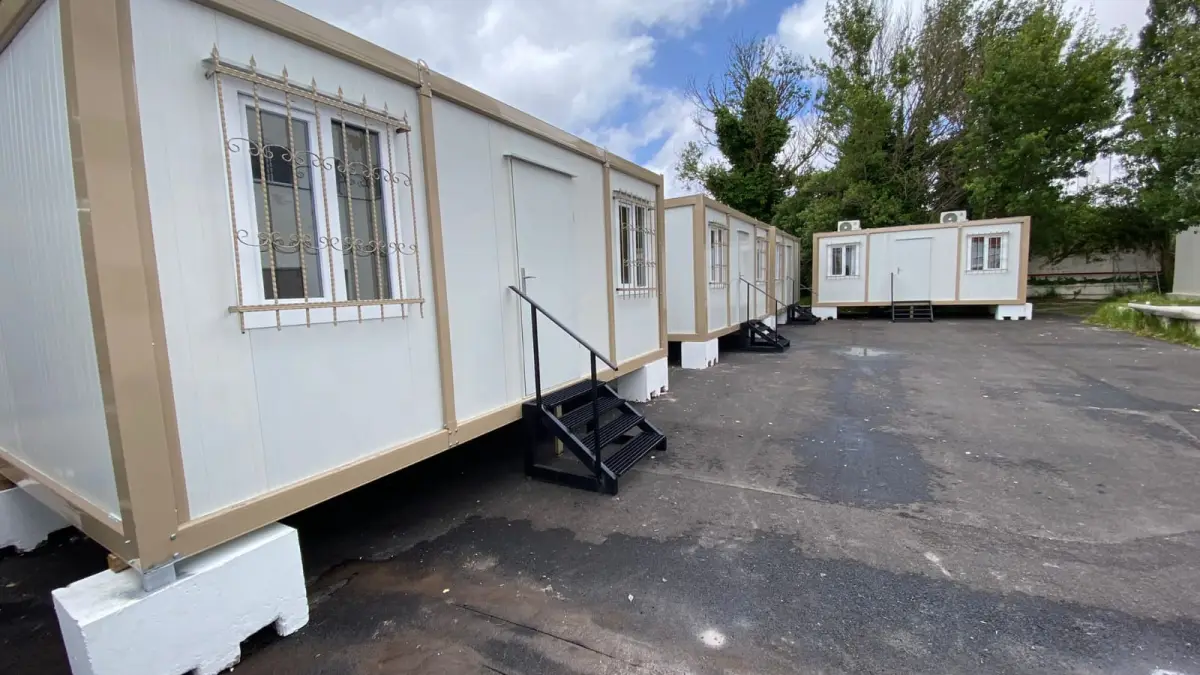
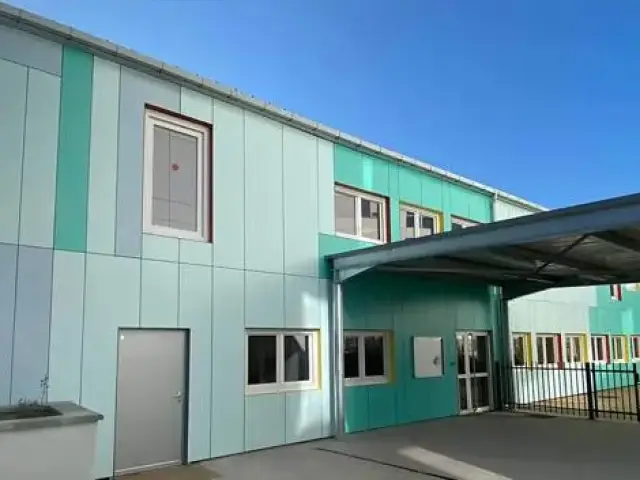
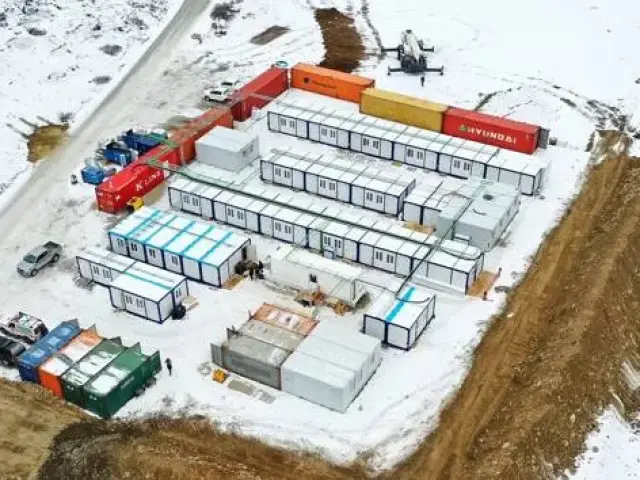
A modular building is several factory-built units joined on site: side by side, end to end, back to back or stacked. Together they make an office block, a welfare complex, a classroom or a site camp. Karmod's modular buildings are made this way, from its own container units.
Small cabins for gates and serving windows
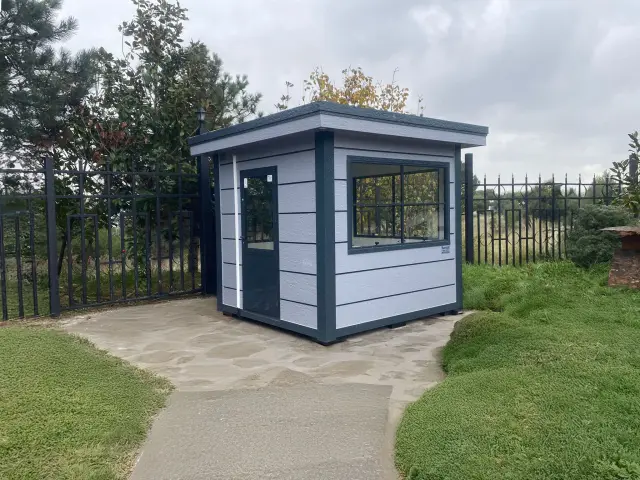
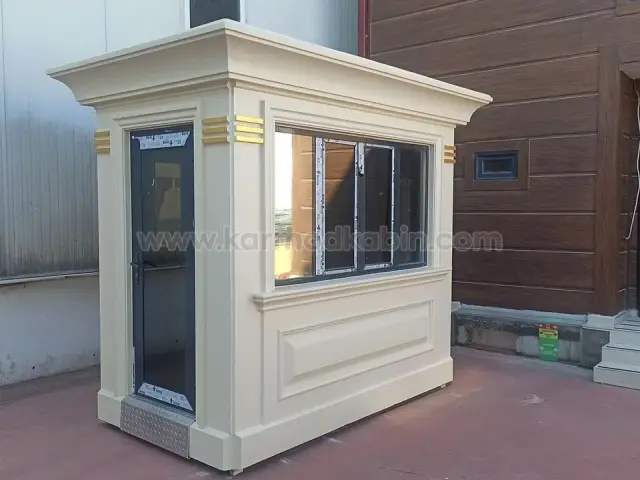
Security huts, gatehouses and kiosks are the small end of the market: cabins from little more than a metre square up to sizes for several staff, used at a gate or car park, or for selling tickets or coffee through a window. Materials range from insulated panel and moulded GRP (glass reinforced polyester) to clad and armoured shells.
How Karmod container units are built
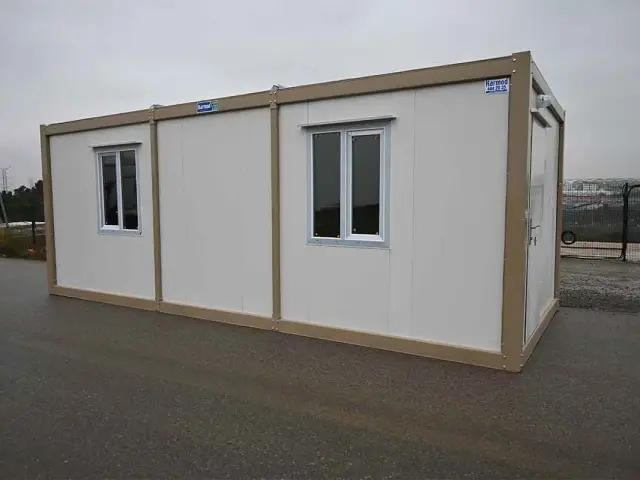
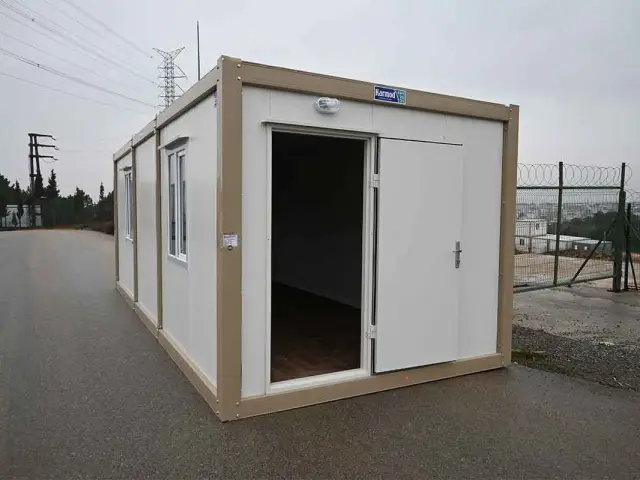
Karmod's container units are built new in Karmod's production facilities in Türkiye, from insulated sandwich panel on a steel frame. None of them starts life as a shipping container. Each arrives as one finished building, lined, floored and glazed.
All 16 layouts, from open-plan and two-room offices to welfare units and a living unit with a bedroom, share four footprints: 2.30m × 6.00m, 3.00m × 5.00m, 3.00m × 6.00m and 3.00m × 7.00m. So a single site office and a modular building start from the same unit.
How a converted shipping container differs
A shipping container is a steel box designed to carry freight, built to standard sizes, most often 20ft or 40ft long and 8ft (about 2.44m) wide. A conversion cuts in doors and windows and adds insulation, lining, electrics and sometimes plumbing. How well one works as an office depends on the container and on who converted it, so ask:
- whether the container is new or used, and what condition the steel is in
- what insulation and lining have been fitted to the walls, floor and roof
- who installed the electrics and whether a test certificate comes with them
Karmod footprints are not tied to freight sizes. The 2.30m × 6.00m unit, listed as 20ft × 8ft, is close to a 20ft container in plan but slightly narrower, while the three 3.00m wide footprints are wider than a standard shipping container.
The terms side by side
| Term | What it usually means | Typical use | Karmod range to look at |
|---|
| Portable cabin | A single factory-built building, delivered complete and lifted onto a base | Offices, stores, canteens, garden offices | Open-Plan Portable Cabin, from £4,290 + VAT |
| Site cabin | A portable cabin working on a construction site or compound | Site office, canteen, drying room, toilets | Container site offices from £4,290 + VAT; Site Welfare Unit with WC & Kitchenette from £7,440 + VAT |
| Container office or container unit | Either a converted shipping container or a purpose-built steel-framed cabin of similar shape | Offices, welfare, stores | Karmod's 16 purpose-built container layouts, from £4,290 + VAT |
| Converted shipping container | A freight container with openings cut in and an interior fitted | Site stores and simple offices | None: Karmod units are purpose-built |
| Modular building | Several factory-built units joined side by side, end to end or stacked | Office blocks, welfare complexes, classrooms, site camps | Container units from £4,290 + VAT each; the whole building is quoted once the arrangement is drawn |
| Security hut or gatehouse | A small cabin for staff on duty at an entrance | Gates, barriers, car parks, reception points | Insulated Panel Cabin from £2,290 + VAT; armoured cabins from £39,900 + VAT |
| Kiosk or ticket booth | A small cabin built around a serving window or counter | Tickets, programmes, coffee, retail | GRP Cabin from £3,890 + VAT; MetroCity from £5,595 + VAT; KompoCity from £6,890 + VAT |
Portable cabin, site cabin, container office and modular building all lead to the same Karmod product: a factory-built container unit, used alone or joined to others. Prices are per unit and exclude VAT, delivery and offloading.
Which one do you need?
One office on a construction site
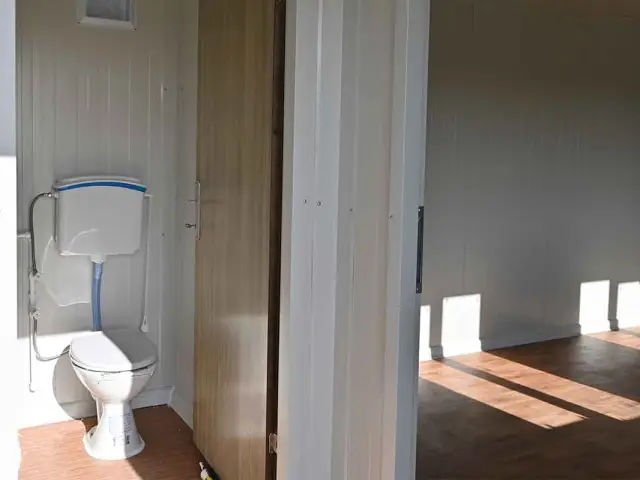
A single container unit is usually enough. The open-plan layout is one room, from £4,290 + VAT. The Site Office with WC & Kitchenette puts a WC cubicle and a kitchenette in the same unit, from £7,440 + VAT, for sites with no other toilet close by.
A team that needs an office, a mess room and a toilet
For a small team, one Site Welfare Unit may cover all three: a WC and kitchenette in its central core, and a room with its own door at each end for the office and the mess room. A bigger team needs more than one unit. Standing apart on the compound, each is a site cabin in its own right; joined into one building, they become a small modular building.
More room than one unit, or a second storey
If you need more floor space than the largest footprint, 3.00m × 7.00m, or a two-storey office or a camp, you are looking at a modular building. Stacking is how one of our projects doubled its office space without taking more ground: a two-storey container block with an external staircase. Tell us how the units should sit and we confirm the arrangement on a drawing.
Someone on duty at a gate, barrier or car park
Choose a security hut. The smallest Insulated Panel Cabin is 1.10m × 1.10m and weighs 100kg, for a narrow pitch, while armoured cabins are for high-risk posts where the shell itself has to protect the occupant. Our guide to choosing a security hut compares all six ranges. Four are listed under security huts, gatehouses and kiosks, the armoured range has a bulletproof category of its own, and the precast concrete cabins have theirs.
Selling tickets, programmes or food
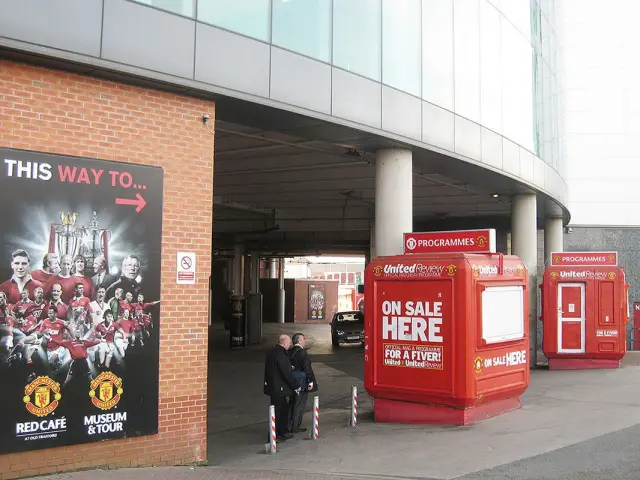
You need a kiosk. Karmod GRP kiosks sell matchday programmes at Old Trafford, and a GRP ticket kiosk was supplied for FlixBus in the company green: the moulded shells are finished in each client's colours.
A garden office or studio at home
Several container layouts are offered for garden use, including the open-plan cabin with its door in the short end wall. At home the label matters less than the use: in England and Wales, a garden office used alongside the house is treated differently from an annexe someone sleeps in, under both planning and Building Regulations. Our guide to cabins on private land explains the rules.
A note on planning and building control
Planning permission and Building Regulations turn on what a building is for, how big it is, where it stands and how long it stays, not on what the seller calls it. Each UK nation sets its own rules, so ask your local planning authority, and building control (building standards in Scotland), before you order. We can supply drawings for an application.
Ask us which one fits
Tell us what the building is for, how many people will use it, how long it will stay and your postcode. Send it to our team in Leicestershire or call 0116 403 0143, and we will recommend the layout or cabin that fits. Asking does not commit you to anything.